Custom or Stock Blinds in Bargersville: The Real Cost Math
Most of the regret around buying blinds traces back to a handful of avoidable mistakes, not to bad luck or a bad product. Skipping the square check is one. So is assuming a cut down blind will behave like a custom one for the next ten years. This walks through the mistakes that show up most often in a Bargersville home, and how to avoid making them.
What Happens When a Stock Blind Gets Cut to Fit
The price gap between stock and custom starts to make sense once you understand what a cut does to a blind. Stock ships in fixed sizes, and a store's saw brings it down to the width you need, usually to the nearest eighth of an inch. That service is free or nearly free, part of why the sticker price looks so good.
What it costs instead shows up later, mechanically. The headrail, the tilt rod, the bottom rail and every slat all get shortened, but the ladder strings that hold the slats level do not move, since they were spaced for the original, wider blind. On a blind that lost several inches, a length of slat near each end can hang past the outermost ladder with nothing supporting it.
That is the real cause of the sag on the ends of an older cut down blind, and it is not a manufacturing defect. It is geometry that changed after assembly. Roller shades carry a version of the same risk: a tube cut out of square can make the shade telescope, walking sideways against the bracket with every cycle.
What a Proper Measure Actually Checks
The third mistake is treating a measure as a formality instead of the thing that actually prevents returns. A real measure checks width at three points on the opening and uses the narrowest, and checks height at three points and uses the shortest, because a single number from the middle of the window misses exactly the spots that cause a bad fit.
Skipping the mounting depth check is its own common error, since a shallow opening rules out an inside mount regardless of how good the rest of the measurement is. Obstructions get missed the same way: a crank that swings into the shade's path, an alarm contact mounted where a bracket needs to go, trim that is not actually flat.
None of these checks are complicated. They are just easy to skip when someone is standing in a store with one number from a tape measure at home. A Bargersville house with a dozen windows usually has two or three openings that need a real decision, and catching those before ordering is far cheaper than catching them after.
Where Stock Makes Sense and Where It Doesn't
Sorted by room instead of by opinion, the split is not complicated. Stock earns its place in a garage, a laundry room, a basement, or a guest room that hosts people a couple of times a year. It works in a rental between tenants, where replacement cost matters more than a decade of lifespan, and as a temporary cover while saving for the treatment actually wanted in a room that matters more.
Custom earns its cost in rooms where a window gets used daily and where the fit is visible from across the room: a primary bedroom, a kitchen, a family room, anything facing the street. Wide openings, tall openings, a bedroom that needs real darkness, sliders and anything motorized belong on that list too, since those all run into the same fixed size problem stock cannot solve.
Nationally, stock runs roughly $60 to $600 a window and custom runs roughly $250 to $2,600, and a well planned Bargersville project usually spends from both ends of that range in the same house. Keep the same choice on any two openings visible from the same spot, and draw the line at a doorway or a floor rather than in the middle of a wall.
Why Openings Are Rarely Perfectly Square
Houses move. Framing settles over the decades, and an opening that left the factory square is not necessarily square by the time anyone orders a blind for it. A real measure checks both diagonals corner to corner for this reason: if the two numbers do not match, the opening is out of square, and the difference says by how much.
A stock blind is a rectangle. Size it to the widest point of an out of square opening and it binds at the narrowest point, dragging every time it moves. Size it to the narrowest point instead and daylight shows along one side in a wedge wider at one end than the other. Neither outcome is fixable once the product has been cut.
Older streets in Bargersville produce this constantly, and so do additions and rooms built above a garage. None of it means the house was built badly. It just means the product has to be built around the actual opening, which is what a custom order does once the factory has real numbers to work from.
Warranty, Remakes and Who Pays If It's Wrong
A measure creates accountability, which is really what it is selling along with the product. When a company takes the numbers and orders to them, a remake caused by a bad number is their mistake to fix, not the homeowner's. That is worth stating plainly before signing anything, since it rarely gets said out loud otherwise.
Stock skips that accountability by design. A blind cut at a store to a number someone else wrote down is generally a final sale, so it is worth asking about the return policy before the saw runs rather than assuming there is a safety net.
The paperwork matters as much as the measure itself. Get the mount type and the lift type for each opening written down, which IN law already requires for residential jobs over $150 under IC 24-5-11 in the form of a written contract with a scope and a total price. Lead time runs roughly two to five weeks from that order to the install, the tradeoff for a product built around a real measure instead of a shelf size.
Split the house by how hard each window actually works. Daily use and a visible spot in the living space point toward custom. A room touched twice a season points toward stock. Just keep the same choice on any two openings visible from the same spot. Bargersville Window Treatments will walk a Bargersville home and say plainly which rooms do not need custom pricing. Call (317) 854-7158 and we will measure either way.
Frequently Asked Questions
How long does custom take compared to buying stock today?
Custom runs roughly two to five weeks from order to install, since the product gets built to your finished dimensions after you order it. Stock can go home the same visit if the size is already on the shelf. That speed difference is genuinely the strongest argument for stock, particularly if a house is being listed or a rental is turning over between tenants.
Should I still get a professional measure if I'm buying stock?
It helps to at least measure carefully yourself. Take width at both ends of the opening and at the middle, and use the smallest number. Take height at both ends and the center, and use the shortest. Check both diagonals for square, and check the flat depth inside the opening against the minimum the product needs for an inside mount. Those checks take a few minutes and prevent most returns.
What's the actual cost difference between stock and custom?
Nationally, stock window coverings run roughly $60 to $600 a window, while custom, measured in the home and installed, runs roughly $250 to $2,600. The gap covers the measure, manufacturing to your exact size, installation, and having someone to call if a mechanism fails down the road. Size, fabric and mount type move both ranges quite a bit.
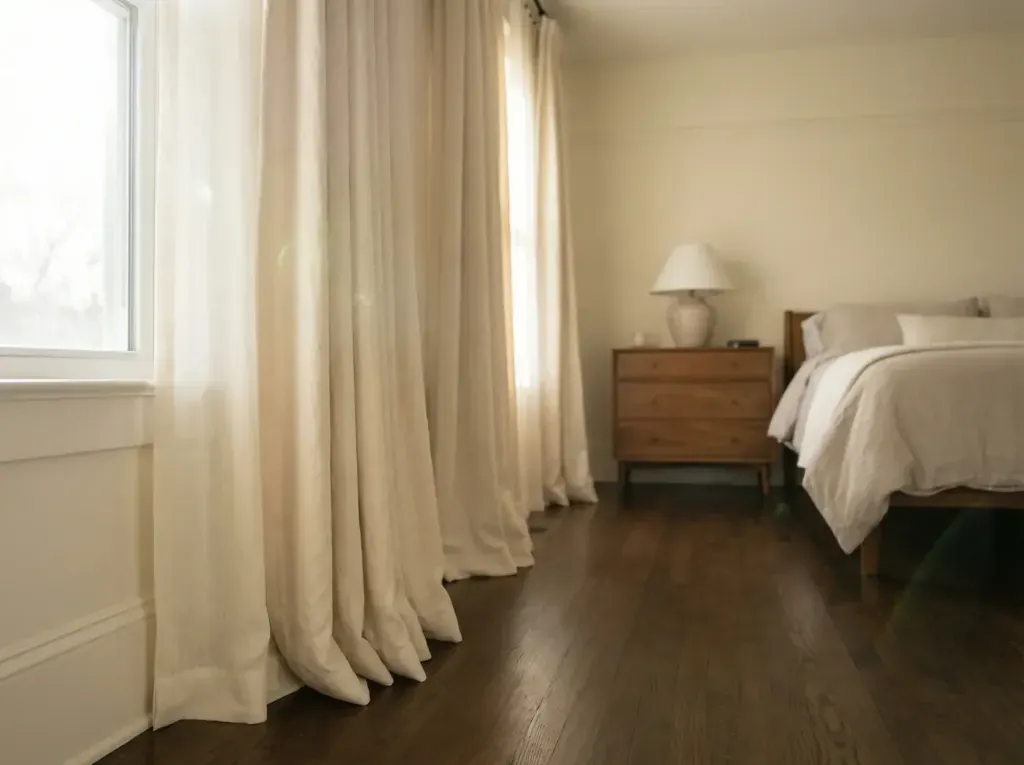 What Custom Drapery Costs in Bargersville and Why It Varies
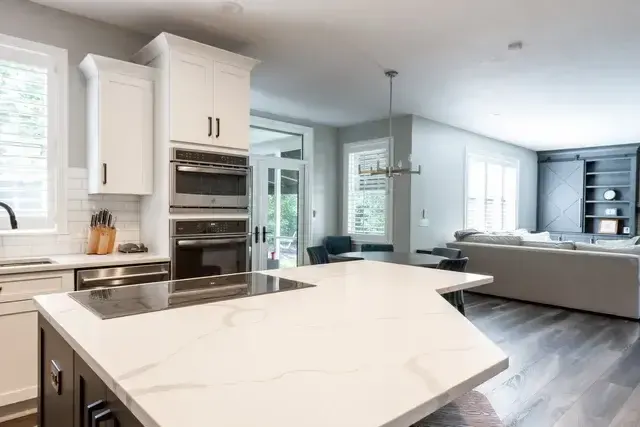 Budgeting Window Treatments for Your New Bargersville Home
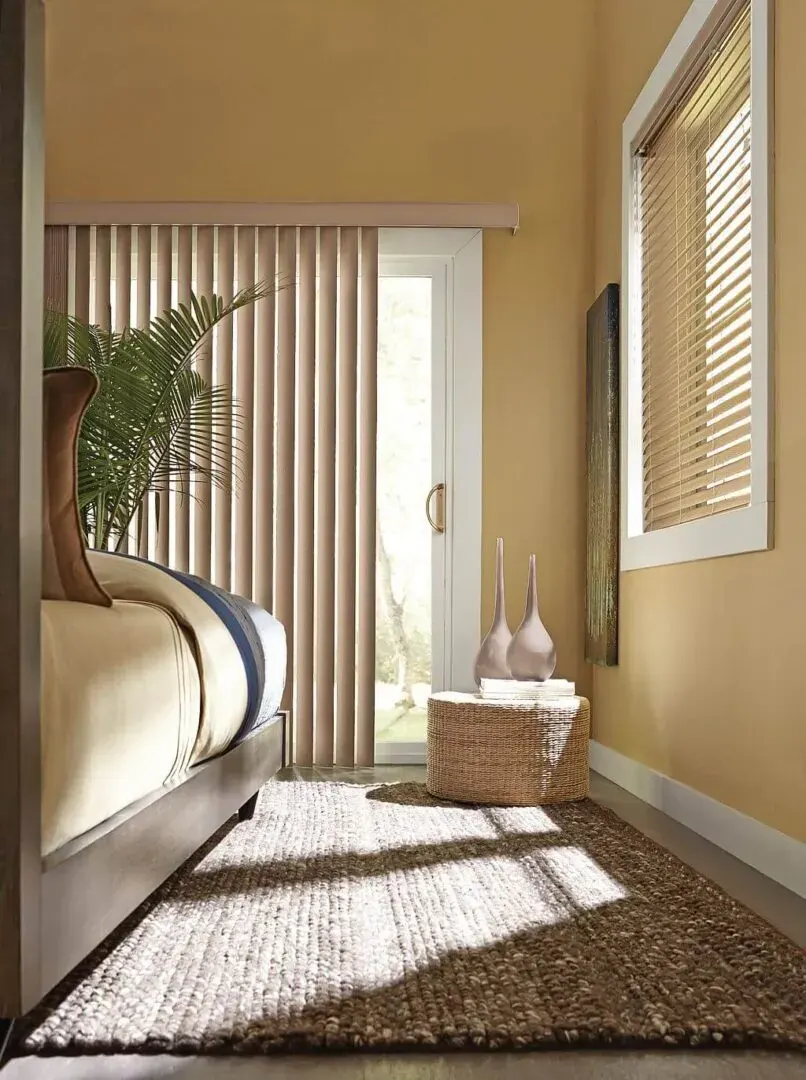 Safer Window Coverings for Bargersville Nurseries and Playrooms