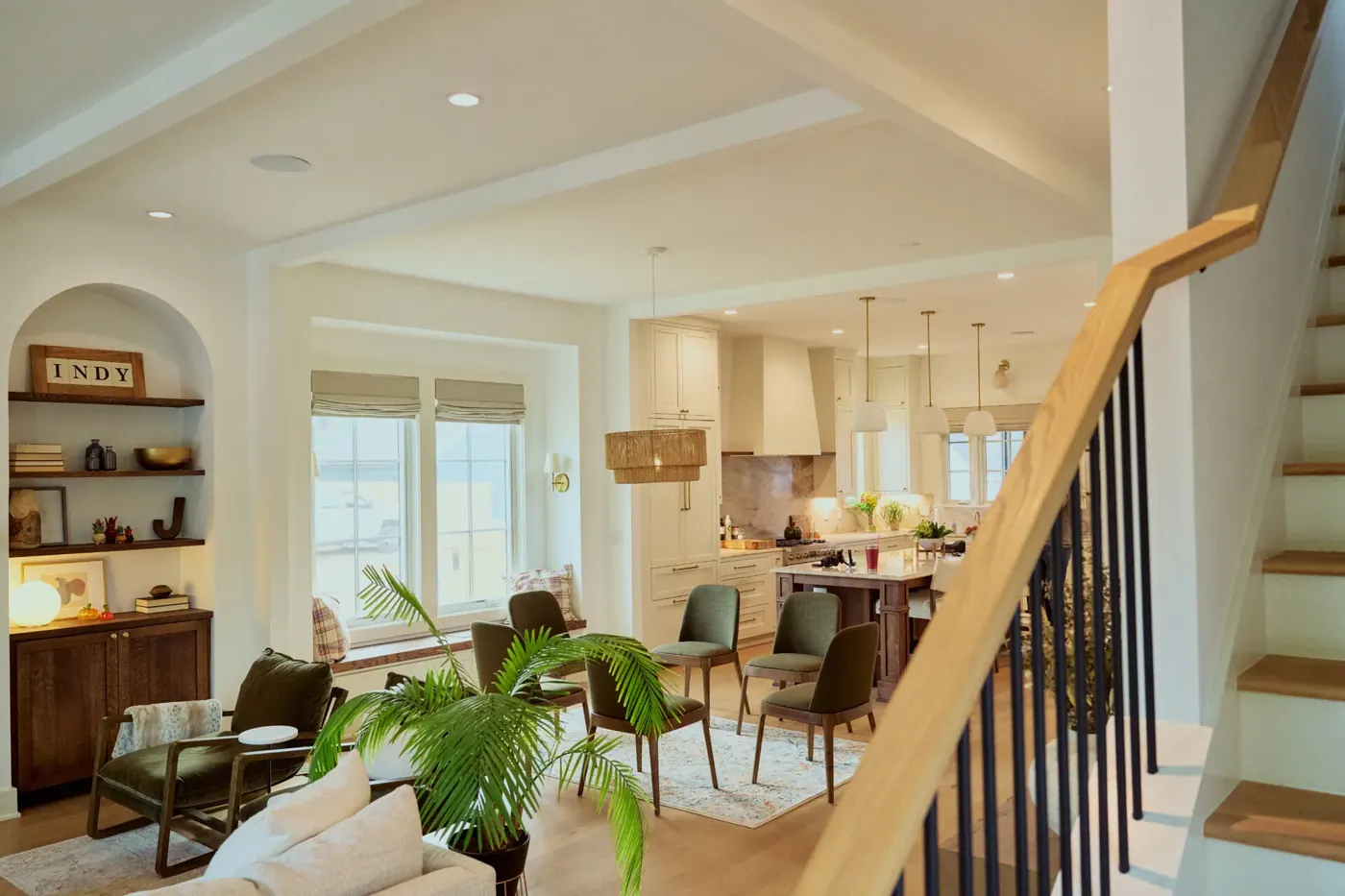
Wood Blinds Across Bargersville, IN
Real hardwood where Bargersville air stays dry and steady.
These are the questions we field most often about this product. Several of the answers include a caveat. That's deliberate, because a caveat before the sale is far cheaper than a complaint after one.
- Service: Wood Blinds for Bargersville homeowners
- Service area: Bargersville, IN and surrounding areas Nothing in window treatments needs a middle-of-the-night call-out. What matters is the fabrication window, typically two to five weeks. Service and repair work sits outside that and gets handled on a much shorter timeline.
- Insured and bonded
- Serving Bargersville, IN since 2008
Expert Wood Blinds for Bargersville Homes
Bargersville sits at the premium end of the south metro, with a median owner occupied value of $438,900 and 44.1 percent of adults holding a bachelor's degree, and hardwood blinds read that way on the wall. They belong in The Preserve at Copperleaf above all: 51 parcels on a 0.46 acre median, semi custom houses running 20 to 28 openings, with wood or clad returns deeper than the production standard next door. The street names there, Oak Forge Way and Pine Knoll Court, point to retained woodland, and a shaded rear elevation is exactly where a real wood blind lives longest.
Wood moves. It's a hygroscopic material in a town whose muggy season runs from roughly May 25 to September 22 and whose January averages a 20.9 degree low, so slats take on moisture in August and give it back in February. That's fine in a dining room and it is not fine over a kitchen sink or in a full bath, where we'd put faux wood instead and tell you why. Hardwood is also heavier than PVC at the same slat size, so a wide opening needs a center support bracket or a split into two blinds under one valance. Stain lots vary between production runs, which matters if you order the house in stages.
Signs You Need Wood Blinds
If you notice any of these in your Bargersville home, it is worth booking a measure. None of it is urgent, and none of it fixes itself either.
A study feels unfinished every time you walk in
The dining room has had bare windows for years
A high window nobody can reach stays closed all year
One corner of the opening sits visibly lower than the other
Cloth tapes on the existing blinds have frayed through
Old slats have lightened on the sun side only
The valance ends are open and the brackets show
You're matching window blinds to a stained stair rail
The old headrail is tired but the slats are fine
Route holes ruin an otherwise good stained blind
How Bargersville Window Treatments Handles Wood Blinds
Every job follows the same five-step process. Transparent, thorough, and done right the first time.
Diagonal square check
Species and slat size chosen
Tapes and valance selected
Grain variation explained honestly
Slats leveled at install
Wood Blinds in Bargersville
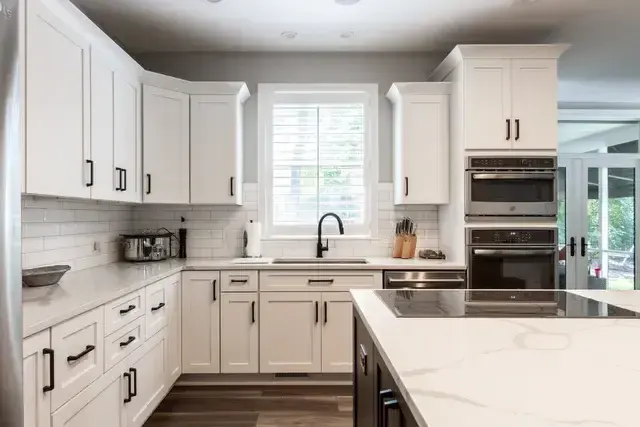
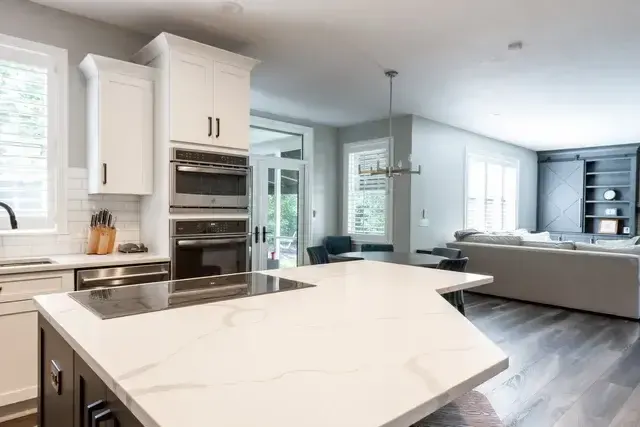
Photographs from real wood blinds jobs completed by our crew in Bargersville and surrounding areas.
What Wood Blinds Includes
Every Bargersville job is documented item by item. Here is what the crew covers.
Room-by-room check that every opening stays conditioned all year before wood goes onto the order
Wet rooms ruled out in writing, because a bath or a window over a sink is a faux wood job
Three widths and three heights per opening, plus a diagonal check for square
Mounting depth measured so the headrail sits fully inside the opening where an inside mount is wanted
Basswood specified as the working standard, with heavier species used only where the grain has to carry a room
Slat size chosen against the opening height and the weight of the existing casing
Wider single spans priced without a support bracket, since wood weighs less per foot than composite does
Stain or paint matched from a physical sample held against your actual trim in your actual light
Grain variation and color drift across a stained order explained before anything gets signed
Cloth tape ladders selected where a woven band suits the room and hides the route holes
Routeless construction offered where a line of lit holes would bother you at night
Valance profile and return depth chosen to sit correctly against existing millwork
Wand tilt set as the default, with cord tilt only where a wand fouls a handle or a return
Cordless lift specified in bedrooms, stairwells and any room children use
Products specified to conform to ANSI/WCMA A100.1-2022 for cord access
Light gap per side disclosed at the measure and carried onto the paperwork
Written contract with scope, dates and total price, as IC 24-5-11 requires on residential work over $150
Slats leveled and both full tilt travel and full lift travel tested at every window on install day
What Wood Blinds Cost in Bargersville
Published national figures for the category put stock blinds and shades near $60 to $600 a window, with custom-fabricated product running roughly $250 to $2,600. Those are national ranges and they aren't a quote for a house in Bargersville. Real wood sits above faux wood in that band and it should, because you're paying for a milled hardwood slat and a finish that has to look right next to your existing trim. Size drives the number first. After that it's the finish: a stock stain costs less than a color matched to millwork, and a matched finish sometimes means a sample run before production. Cloth tapes, a deco valance and routeless slats each add. Bargersville Window Treatments prices from measured openings in Johnson County, never from an average.
How Wood Blinds Differ by Product
Every product in this trade behaves differently in a room. Here is what that means for this work.
2 inch basswood slat: Our working standard in real wood. Basswood is light for its stiffness, which is exactly what you want in a lift mechanism, and the 2 inch slat suits the openings and the casing we find in most central Indiana houses.
2 1/2 inch basswood slat: The same species with a wider face, so fewer slats cross the opening and the view out improves when they're tilted open. It suits taller windows and rooms with substantial casing, where a narrow slat starts to look busy against the trim.
Heavier hardwood species: Some lines offer denser woods that take a stain with more figure than basswood shows. They cost more and they weigh more, so we reserve them for a room where the blind is meant to be looked at rather than looked through.
Stained finish: A transparent finish that lets grain read through, which is the reason to buy wood at all. Expect variation from slat to slat, because that's the wood talking. We hold a physical sample against your trim before committing anything to an order.
Painted finish: An opaque finish in white or an off-white, which gives you wood's light weight and a face that reads as painted millwork. It's the right call when the blind should disappear into the trim instead of standing apart from it.
Custom color match: The factory matches a finish to a sample you supply, usually a piece of your casing or a stair part. It adds cost and time, sometimes a sample run before production, and it's the only honest way to hit an existing stain.
Cloth tape ladders: A woven tape running down the face of the blind that covers the route holes and adds a color band. On a stained wood blind it's a strong design move, and it narrows the view a little wherever a tape crosses the slats.
Routeless wood slats: The lift cord sits in a notch at the back edge instead of a punched hole, so a closed blind has no line of bright dots across it. In a bedroom with a streetlight outside, that's the difference people actually notice.
Crown or deco valance: A shaped valance with a deeper face than the standard flat one, meant to read as trim rather than as a cover for hardware. Choose it where the casing is heavy enough that a plain valance would look thin against it.
Cordless lift: A constant-force spring in the headrail with no lift cord on the blind at all. Wood's lower weight makes cordless feel better here than it does on composite, and it's what we put in bedrooms and anywhere along a stairwell.
Wood Blinds FAQ
Questions we hear most often from Bargersville homeowners considering wood blinds.
Wood Blinds Across Bargersville
We measure and install in every one of these Bargersville neighborhoods. Each has its own page with the build eras, window conditions and mounting notes for that section.
- Wood Blinds in Kensington Grove
- Wood Blinds in The Preserve at Copperleaf
- Wood Blinds in Copperleaf
- Wood Blinds in Bradford Place
- Wood Blinds in Waters Edge
- Wood Blinds in Smokey Row Estates
- Wood Blinds in Bellingham
- Wood Blinds in Sawyer Walk
- Wood Blinds in Meadowbrook
- Wood Blinds in Old Bargersville and Union Village
- Wood Blinds in Hickory Stick
Other Window Treatment Services in Bargersville
Bargersville Window Treatments handles the full scope of window treatment work. Explore our other services below.
Faux Wood Blinds in Bargersville
PVC slats where Bargersville humidity would ruin real wood.
Learn more →Vertical Blinds in Bargersville
Patio door coverage sized to Bargersville's post-2000 rear elevations.
Learn more →Aluminum Mini Blinds in Bargersville
Budget slats for the Bargersville openings nobody photographs.
Learn more →Schedule Your Free In-Home Measure in Bargersville
Reach Us Directly
Our team prioritizes scheduled measures and service calls, and books in-home measures during business hours.
Ready to Book Your Measure?
Call us to set up an in-home measure, or to ask about a treatment that has stopped working. We will talk it through on the phone first.