Bathroom and Kitchen Shades: What Material Actually Matters
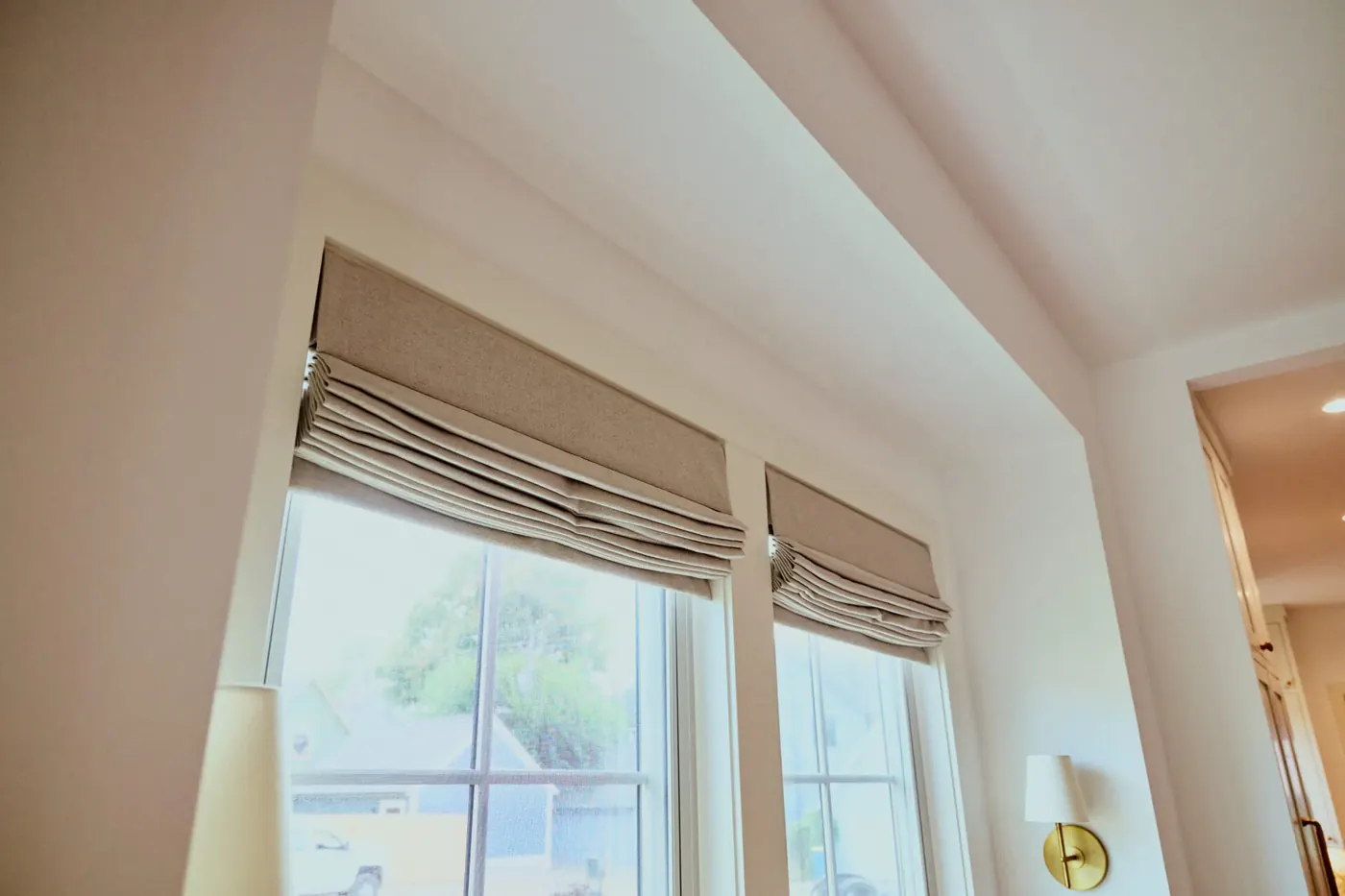
A bathroom window has one job that's harder to solve than it looks: block the view in without turning the room into a cave that needs the lights on at noon.
How Humidity Changes What You Should Hang
A kitchen doesn't hit the same humidity spikes a bathroom does, but it runs warmer and greasier for longer stretches, especially around a stove or a dishwasher venting steam after a cycle. Real wood tolerates a kitchen a bit better than it tolerates a bathroom, but it's still not the best choice directly over a sink or near the range.
Faux wood and vinyl-based roller and cellular shades handle the kitchen's combination of heat and grease better than wood or a heavily textured fabric does, which is why they show up so often in Bargersville kitchen recommendations over anything meant for a formal dining room instead.
This is also where day-to-day habits matter more than the room's overall humidity level. A kitchen where someone cooks every night sees more grease and steam exposure over a year than a kitchen that mostly handles reheating and coffee, even if both rooms measure about the same on a humidity gauge.
Keeping Grease and Steam From Ruining a Shade
Any fabric or material chosen for privacy in a bathroom still has to deal with steam on a near-daily basis, which is why the privacy conversation and the material conversation aren't really separate. A dense, good-looking privacy fabric that mildews after six months of showers wasn't actually the right choice, no matter how well it blocked the view.
This is the practical argument for a vinyl or PVC-faced shade over a natural fiber option even when both offer similar privacy: one wipes clean and keeps its shape, the other needs more careful handling and better ventilation to last the same number of years in a Bargersville bathroom.
It also helps to think about who else uses the bathroom. A guest bathroom that sees occasional use has more flexibility for a slightly higher-maintenance material, since it isn't dealing with steam every single day the way a primary bathroom attached to a bedroom does.
The Trouble With Windows Over a Sink or Tub
The window closest to the water source fails fastest, which makes sense once you think about it: it's the one getting hit with the most direct steam and the occasional splash. A wood blind over a tub often shows warping years before an identical blind elsewhere in the same bathroom on a window farther from the shower.
This is also where reach makes a bad situation worse. A blind that's started sticking or warping over a tub is harder to fix or even inspect closely, since climbing into the tub to mess with it isn't something most people want to do, so a developing problem in that spot often goes unaddressed longer than it would anywhere else.
Retrofitting isn't always possible either. A kitchen island window or an unusually shaped bathroom opening sometimes has hardware that simply doesn't have a motorized or cordless equivalent available, in which case the more realistic path is a full product swap rather than trying to save the existing mechanism.
Getting Privacy Without Losing the Light
Bathrooms want privacy without turning into a cave, and a top-down bottom-up shade solves that specific problem well. You drop the top of the shade down to block the sightline at eye level from outside while leaving the bottom open, which lets light in from below without anyone seeing in.
A frosted or etched window film is another route entirely, letting light through as a soft glow while blurring anything behind it, though it doesn't give you the option to open the view back up the way a shade does. For a Bargersville kitchen window that faces a neighbor's yard or a street, a light-filtering fabric on a standard roller often does the job without needing anything more specialized.
It's worth thinking about how the room gets used at different times of day too. A bathroom that only needs privacy during a shower, with the door closed the rest of the time, might not need a permanent film at all, where a bathroom off a main hallway that gets walked past constantly benefits more from a covering left in one privacy-first position.
Hardware That Doesn't Rust or Swell
The shade material gets most of the attention, but the hardware holding it up is made from a different material entirely and deserves the same scrutiny. Bare steel brackets and clips will eventually show surface rust in a humid room, while stainless steel or a powder-coated finish resists that corrosion for the life of the installation.
Wood valance boards and mounting boards share the same vulnerability real wood slats have, so it's worth confirming what a valance or cornice is actually made from before it goes over a Bargersville bathroom or kitchen window, since a nice-looking wood trim piece can warp long before the shade underneath it shows any wear at all.
This same logic applies to the screws holding a bracket in place, not just the bracket itself. A stainless bracket mounted with a standard zinc-coated screw can still develop a rust bleed around the screw head over time, so matching hardware quality across every component is what actually prevents the problem.
Privacy needs are personal, and what works for one bathroom window doesn't always work for the one next to it. A free in-home measure from Bargersville Window Treatments is the easiest way to compare a shade against a film option for your specific window.
Frequently Asked Questions
My wood blinds are already warped. Can they be fixed or do I need new ones?
Once a wood slat has actually warped or cupped, that's a shape change in the material itself and it doesn't reverse with cleaning or adjustment. If it's one or two slats out of many, sometimes individual slats can be swapped, but if the warping is spread across the blind, replacement is the more realistic option. It's also worth switching material at that point rather than putting real wood back in the same spot.
What's the best material for a small bathroom window that's hard to reach?
Cordless faux wood or a cordless vinyl-faced roller shade both work well here, since neither needs a cord you'd have to reach across a tub or vanity to grab. Motorized versions solve the reach problem entirely if the window is truly awkward to get to, running on a small battery-powered motor controlled by a remote or a wall switch instead of anything you'd need to touch by hand.
Should the kitchen and bathroom windows in the same house match each other?
They don't have to, and in practice they often shouldn't, since a kitchen window usually wants more daily-use durability and easy operation while a bathroom window prioritizes privacy and moisture resistance above all else. Matching the general style, like staying with a similar white or neutral color across both, keeps the house looking cohesive without forcing the same product into two rooms with different actual needs.
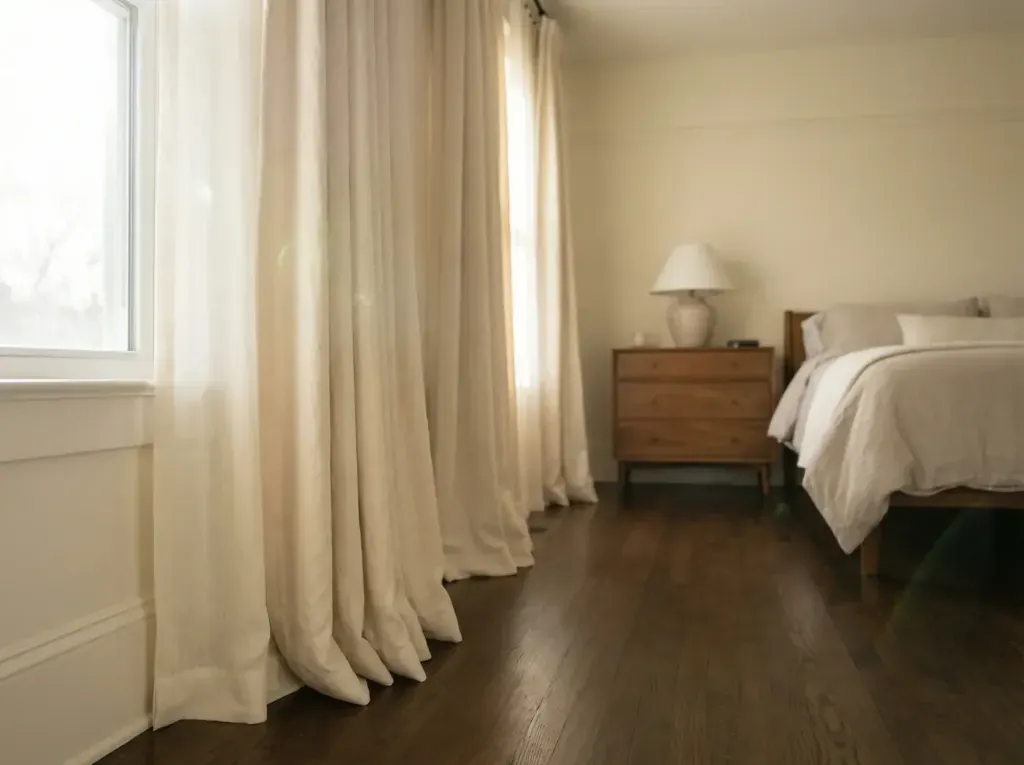 What Custom Drapery Costs in Bargersville and Why It Varies
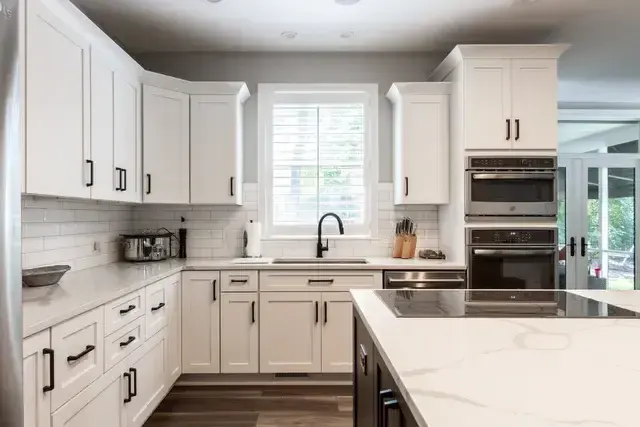 Custom or Stock Blinds in Bargersville: The Real Cost Math
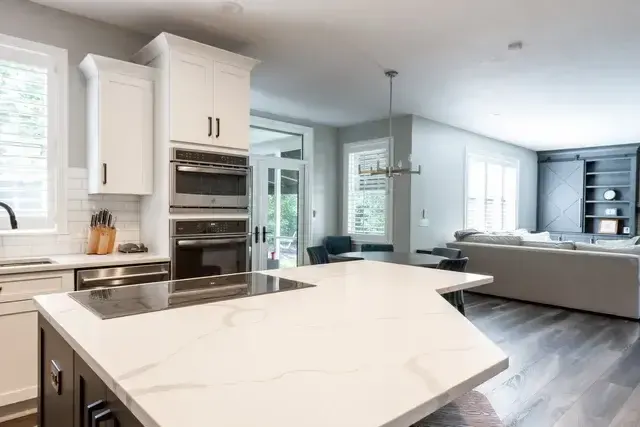 Budgeting Window Treatments for Your New Bargersville Home