How to Shade a Bay Window Without It Looking Like Three Windows
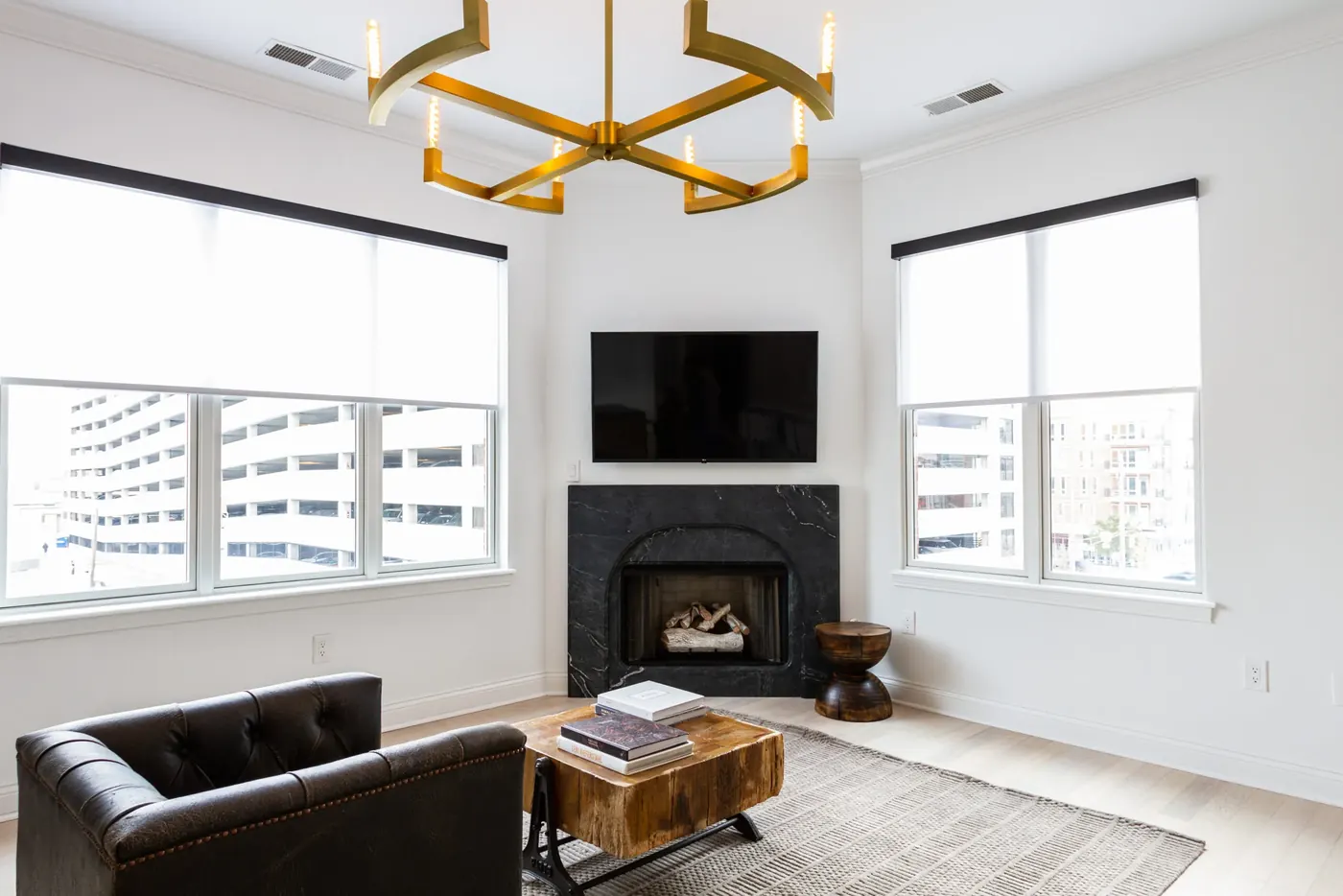
Bay and bow windows bring in more light and more glass than a standard window, which is exactly why they're popular and exactly why they trip people up once it's time to actually cover them.
Why Bay and Bow Windows Need a Different Approach
A bay or bow window treatment gets priced differently than a single window, and understanding why up front saves a lot of confusion once quotes start coming in. You're not buying one shade sized to a wide opening. You're buying two, three, or more shades that happen to share a wall, and each one gets priced and cut to its own exact size, then installed separately.
A standard bay window has two angled side units, usually at 30 or 45 degrees, flanking a center window that's often fixed. A bow window spreads a gentler curve across four to six panes instead. Either way, the per-window cost applies to every unit in the set, which is the main reason a bay window quote in Bargersville looks larger than a single-window quote even at the same fabric grade.
None of that means a bay window treatment has to blow up a budget. It means the budget needs to account for multiple units from the start, rather than getting anchored to a single-window price and feeling surprised later.
Matching Shade Styles to Each Angle of the Bay
On a tight-angle bay, the corners are where trouble shows up. Two roman shades stack into three or four inches of folded fabric at the headrail, and in a 30 degree corner that's often enough for the two units to collide before either one is halfway down. Roller and cellular shades sit flatter and clear the corner with room to spare, which is why they show up so often on bay windows in Bargersville even when a homeowner's first instinct was fabric romans.
The center window usually gets a different answer. If it's fixed and doesn't open, there's more room to be flexible there than on the operable sides. A wider cellular shade keeps the whole bay reading as one treatment, or a fixed decorative panel if the goal is softening the window rather than controlling light through it.
Whatever you land on, keep the fabric and hardware finish matched across every unit in the bay. A roller shade on the sides and a roman in the center reads as three separate decisions instead of one treatment, even if each piece looks fine on its own.
Choosing How to Operate Multiple Shades at Once
This is the decision that changes daily life with a bay window in Bargersville more than any fabric choice does. Manual cord or wand control works fine on a single flat window, but on a bay, reaching three separate pulls, often across a window seat or a piece of furniture, gets old within the first few weeks.
Motorized control solves the reach problem and lets you decide how the units relate to each other. Group all the units in the bay to one remote button so the whole thing opens and closes together, or keep them independent so the side facing the afternoon sun can come down without darkening the rest of the room. Most systems let you set a schedule too, so the shades can close automatically in the evening even if nobody presses a button.
Cordless manual lift is the lower-cost alternative when full motorization isn't in the budget. It removes the loose cord, which matters most right around a window seat where kids or pets spend time, even without going the motorized route.
Getting an Accurate Measurement on a Multi-Angle Window
Good design starts with good numbers, and a bay window will punish you for skipping this step. Measure each opening on its own. Homes built decades ago in Bargersville rarely have three window openings that are perfectly identical, even when the trim was installed at the same time. Settling and hand-framing add up to real differences over the years.
Take width measurements at more than one height in each opening, and take height measurements on both the left and right side of the frame. If a shade needs to fit flush for the design to read correctly, use the smallest number you find so nothing binds or gaps once it's mounted.
Depth is a design constraint too, not just a fit constraint. A deep inside-mount cellular shade can sit almost flush with the wall, while a shallow roller cassette might project further into the room. On a bay window, where sightlines matter from several angles, that difference is more visible than it would be on a flat single window.
What Bay and Bow Window Shades Typically Cost
The budgeting mistake we see most is pricing a bay window treatment like one large window instead of pricing each unit on its own. As a general national range, not a specific quote, a mid-grade cellular or roller shade typically runs $150 to $400 per window, and a bay or bow window simply has more windows than a standard opening, so cost adds up unit by unit rather than averaging down.
Skipping that math ahead of time, and assuming a three-window bay should land near the price of one large window, is how people end up surprised by a quote that was actually reasonable for what it included.
The other cost mistake is assuming motorization has to go on every unit or none at all. Motorizing just the hardest-to-reach unit, often the one behind a window seat, and leaving the other two on a simple cordless lift is a common middle ground that keeps the budget in check. A free in-home measure will tell you exactly where your numbers land instead of guessing from a general range.
A real number for your bay or bow window beats a general range every time, and the only way to get one is to have someone measure the actual angles and depth involved, glass and all. A free in-home measure covers exactly that, with no obligation attached. Call (317) 854-7158 whenever you're ready to get one on the calendar.
Frequently Asked Questions
Is motorization worth it for just one window in a bay?
It's a common middle ground. Motorizing the hardest unit to reach, often the one behind a window seat, while leaving the others on cordless manual lift, solves the main reach problem without motorizing everything.
Will an inside mount work on my bay window?
It depends on the depth of your window frame. Inside-mount shades generally need around 2 to 2.5 inches of clear space once you account for a crank handle or window lock in that area, and that space can vary from one unit in a bay to the next even when the openings look alike.
What's the difference between a bay window and a bow window?
A bay window typically has two angled side units, usually at 30 or 45 degrees, framing a larger center window that's often fixed in place. A bow window spreads a gentler curve across four to six panes instead of using sharp angles.
 What Custom Drapery Costs in Bargersville and Why It Varies
 Custom or Stock Blinds in Bargersville: The Real Cost Math
 Budgeting Window Treatments for Your New Bargersville Home