What Plantation Shutters Cost in Bargersville and Why They Last
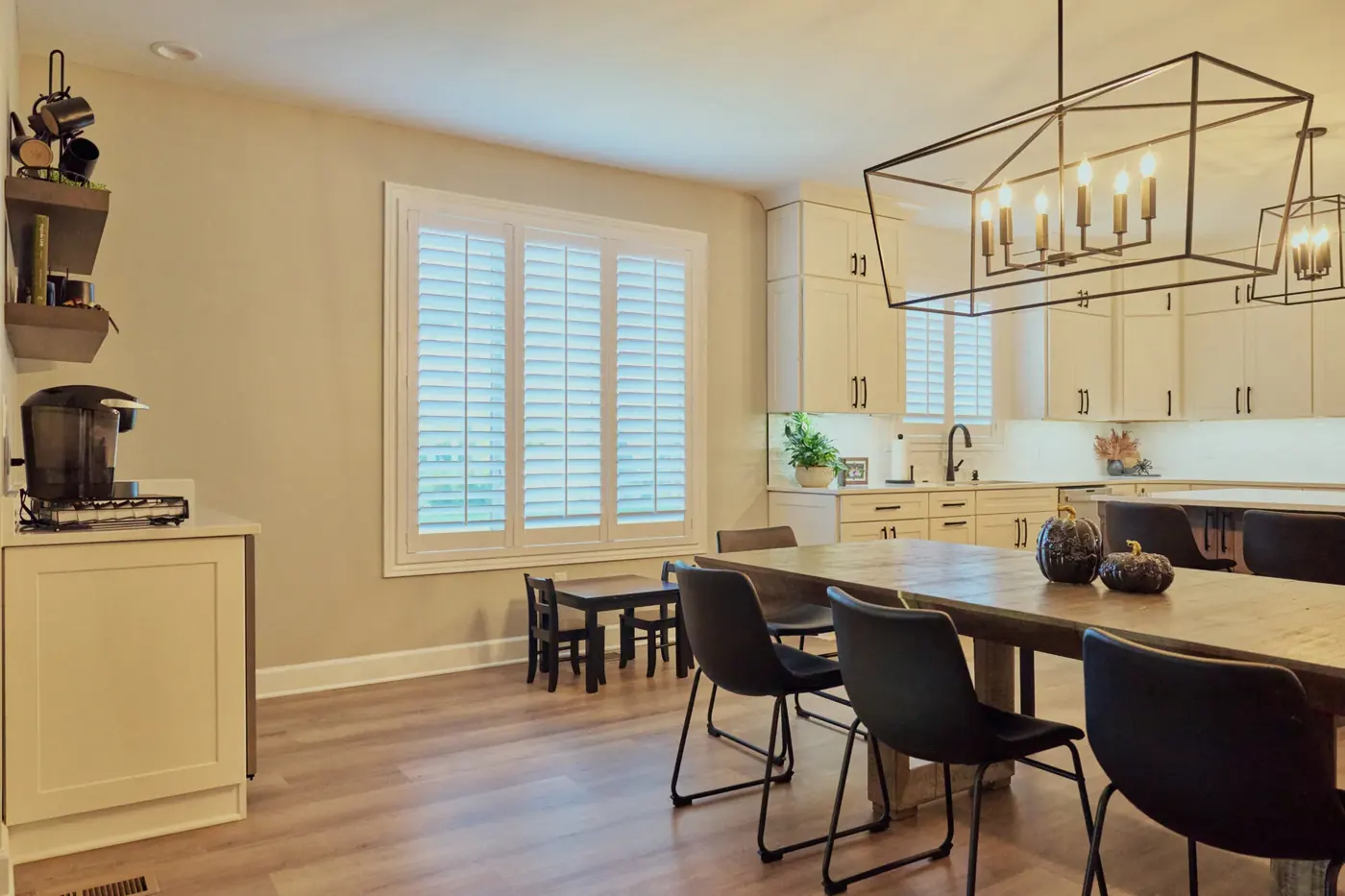
Most shutter regret in Bargersville does not come from a bad product. It comes from a spec that got skipped or a room where the wrong option got applied anyway: composite where hardwood was needed, a divider rail left off a tall panel, a louver picked from a photo instead of the actual window, or a frame style that fights the trim already in the room. Here are the mistakes that show up most, and how to catch them before the order goes in.
Measuring the Opening Before Anything Else
Before a shutter measure counts as complete, a few numbers need to be on paper: width taken in three places and height in three places, with both diagonals measured corner to corner on top of that. If those diagonals differ by more than about a quarter inch, write down that the opening is out of square, since that single fact decides the frame conversation that follows.
Ask whoever measures your Bargersville home to show you the numbers rather than just stating a conclusion. A shutter panel is a rigid rectangle, and a wedge of daylight down one edge is the visible result of an opening that was not checked carefully enough before the order went in.
Confirm this step happens even if the house is new. Drywall corners build up unevenly and throw a window out of square just as easily as decades of settling in an older home, so age is not a reason to skip the check.
Frame Styles and Panel Layout
Bedrooms are the strongest case for a divider rail, since closing the bottom section while the top stays open gives privacy from the street without living in the dark all day. Shutters are not a blackout product. Closed louvers still pass light around the edges and between the slats, so a light sleeper in a bright bedroom often ends up layering a drapery panel behind or in front of the shutters.
Bathrooms and kitchens want composite paired with a layout that respects the obstacles in the room. Cafe style shutters, which cover only the lower half of the opening, handle a countertop or a faucet that would otherwise block a full panel from swinging open. Check the swing clearance at the measure with the faucet raised to its tallest position.
Tall stairwell openings want a divider rail whether the homeowner likes the visual line or not, since the stiles need the stiffening on a panel that size. Lining the rail up with a transom or the head of a nearby door makes it look intentional instead of arbitrary.
Louver Width and What It Does to the Room
Louver width does not move the price much on its own, but it changes what you are getting for the price. Common sizes are 2 1/2 inch, 3 1/2 inch, and 4 1/2 inch, each changing how much glass stays open to the view. A narrow louver on a tall window can put twenty or more slats across your sightline, while a wide louver on the same opening might use half that.
Wider louvers need more depth inside the frame to clear the glass as they tilt, and a shallow sill can rule out a 4 1/2 inch louver before you ever get to pick a finish. That is a mechanical fact, not an upsell, and it is worth confirming at the measure so the order does not need correcting later.
The 3 1/2 inch size is the workhorse for most Bargersville rooms and the safe default if nothing about the opening argues for going wider or narrower. Save the bigger louver for the room where the view is worth showing off.
What Shutters Cost
The most expensive mistake on a shutter order is assuming two quotes for the same Bargersville house describe the same product. Custom coverings measured and installed run roughly $250 to $2,600 a window based on national figures, and shutters sit at the top of that range because of the material and labor involved, not padding. A quote that looks low next to another is usually missing a spec, not offering a better deal.
Ask for the configuration in writing: material, louver width, frame style, panel count, and divider rail placement for each opening. Two honest quotes can differ by a wide margin because one is composite with an L frame and the other is stained hardwood with a deco frame, and neither number means anything without that detail attached.
IN issues no license for this trade, so do not judge a quote by a license number that does not exist here. What matters is a written contract with a firm price and scope, which the Indiana Home Improvement Contract Act requires for jobs over one hundred fifty dollars. Skipping that step, not the price itself, is the actual mistake worth avoiding.
Shutters reward a slow measure and punish a fast one. Get the square check done and settle the louver width against the real view before anything goes to the shop. Bargersville Window Treatments measures every opening in your Bargersville home and writes the configuration down where you can read it. We are insured and bonded. Call (317) 854-7158 to get the openings looked at.
Hardwood or Composite
Hardwood shutters are usually basswood, a light and stable wood that machines cleanly and takes stain well. Composite shutters are an engineered core wrapped in a hard finish, or a solid polymer panel. Both are legitimate products, and they simply fail in different places.
Composite does not move with humidity, so it belongs over a kitchen sink or in a bathroom. The trade is weight: a wide composite panel needs a hidden aluminum reinforcement inside the rail or it sags on its hinges after a few years. Hardwood carries a wider panel before it needs that kind of help, meaning fewer stiles standing in a big opening.
Color settles a lot of the decision by itself. Composite comes in a short list of whites and neutrals. Hardwood takes any stain or paint, which matters when matching existing trim. Plenty of Bargersville houses end up with both, hardwood where people sit and composite anywhere water gets involved. From across the room, nobody can tell.
Frequently Asked Questions
How long do shutters take to arrive?
Two to five weeks is typical, since the panels are built to the measurements taken in your home rather than pulled off a shelf. Stained hardwood usually runs toward the longer end because the finishing takes extra steps. Nothing here happens quickly, so build the wait into your plans. If a room needs coverage in the meantime, a temporary paper shade is cheap and comes down without leaving marks.
Will shutters keep my floors from fading?
They'll slow it down. Sunlight is a major contributor to fading in floors, rugs, furniture, and anything else that sits in direct light, and closing the louvers on the sun side puts a solid layer between the room and the glass, which reduces the exposure. Any claim that goes further than slowing and reducing is overselling. The realistic plan is to close the louvers during the hardest sun hours on the west and south sides and accept that some change happens over the years.
Which rooms should get shutters first?
Start with the rooms you sit in every day and the windows the street can see into, usually a living room and the front facing bedrooms. Bathrooms are worth doing next, since composite solves a moisture problem there that fabric never really solves. Closets and laundry rooms can wait, and so can anything behind a door, since a simpler covering works fine where nobody is looking closely.
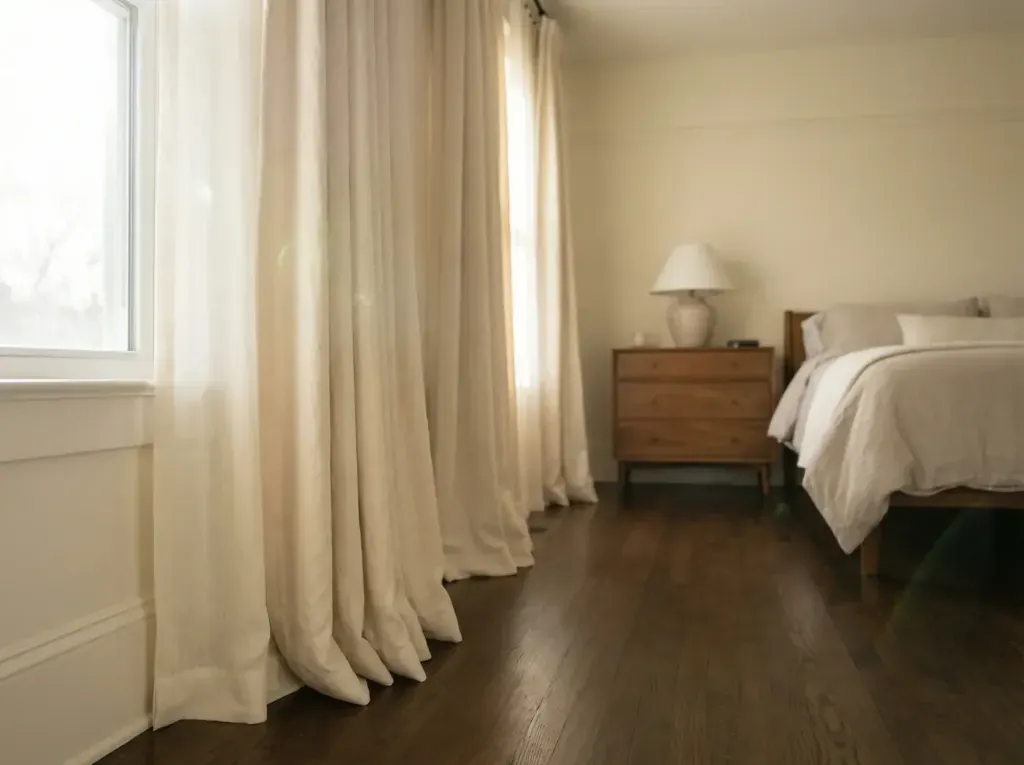 What Custom Drapery Costs in Bargersville and Why It Varies
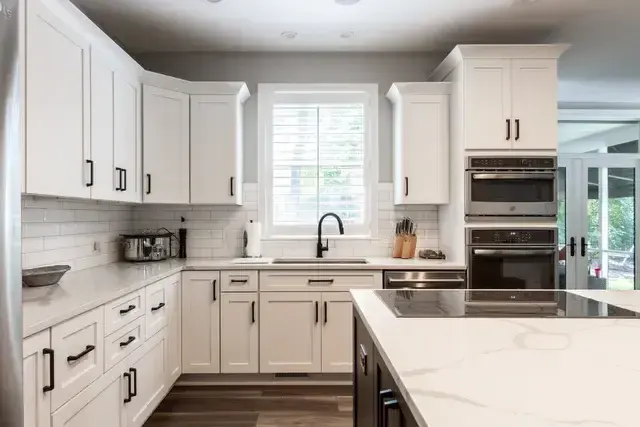 Custom or Stock Blinds in Bargersville: The Real Cost Math
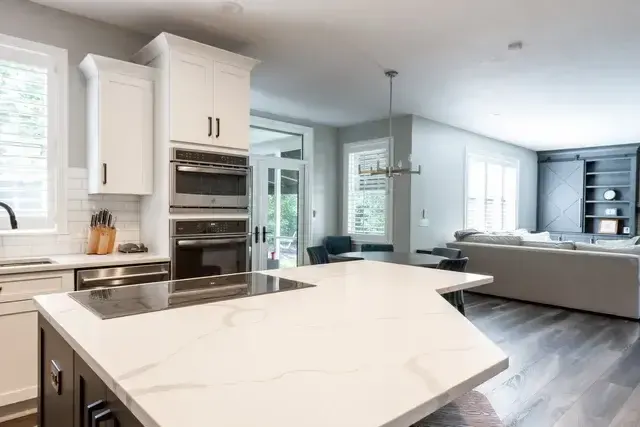 Budgeting Window Treatments for Your New Bargersville Home